The Royal Prince Tutankhuaton. An Innovation in the Art of Amarna
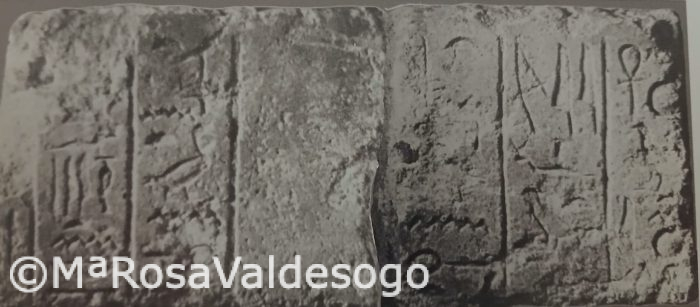
A block from Ashmunein showing Tutankhuaton as royal prince, an innovation in the art of Amarna.


A block from Ashmunein showing Tutankhuaton as royal prince, an innovation in the art of Amarna.
Thanks to the many artifacts of Ancient Egypt found mainly in tombs, we know many aspects of the habits of ancient Egyptian people. However, the archaeological remains need also to be interpreted. For instance, why was the mummy buried sometimes with small female...
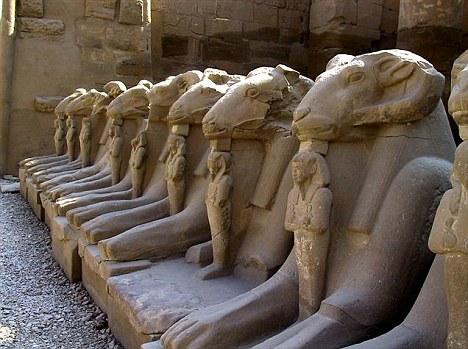
We have been lately writing about the artwork in general. The artwork is a human production conditioned by the author’s skills, by the historical moment and the place where it is produced. Ancient Egypt was not an exception. The big question also for us is, can we...
In Ancient Egypt common mourners taking part in funerary cortege were depicted making many different gestures. These women could raise their arms as if they were praying to the gods the return of the dead. Some times their hands appear over their heads as beating...
The art of Ancient Egypt has a very big interest from the esthetical point of view. But its composition, its scenes, its colors… have always a specific meaning. Before getting into the art of a moment of the history, we should mention some theoretical matters about...
The artists of Ancient Egypt had a particular conception of perspective, which affected in the way they depicted groups of living beings and amounts of things. In our last posts we saw how in Ancient Egypt the funerary scene of Osiris being flanked by Isis and...
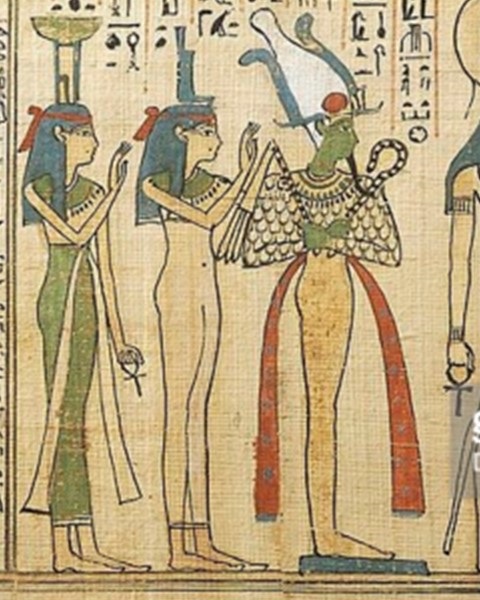
During the New Kingdom the dead was buried with rolls of papyrus containing passages of “The Book of the Dead”. That meant that the artist of the Ancient Egypt applied over this new surfaces a decoration took from the general corpus of images they had. One of the...
In Ancient Egypt groups of common mourners walked during funerary processions making many gestures of lament: raising arms, beating their arms…One of the most typical gestures of these mourners was to pull from their lock of hair. We can watch this typical mourning...
In Ancient Egypt the lateral lock of hair was a distinctive of childhood. For the ancient Egyptian artist of the Old Kingdom, the lateral lock of hair pending from the scalp was, joint with nudity, an iconographical resource applied mainly to boys. Many familiar...
In Ancient Egypt a couple of two professional women in the role of Isis and Nephthys were actively involved in the dead’s resurrection. They appear usually at both ends of the coffin, during the Opening of the Mouth Ceremony or, from the New Kingdom, kneeling and...
The iconography in Ancient Egypt was not gratuitous. Every image had a reason to be, but also every space. From the Old Kingdom the two mourners in the role of Isis and Nephthys were accompanying the dead until the tomb at both ends of the mummy. The hieroglyphs of...
In Ancient Egypt the Legend of Osiris was so important that it was integrated into the solar theology. As a result Isis and Nephthys, the two mourners of Osiris, became an essential part of some solar iconography, so both from the New Kingdom were depicted flanking...
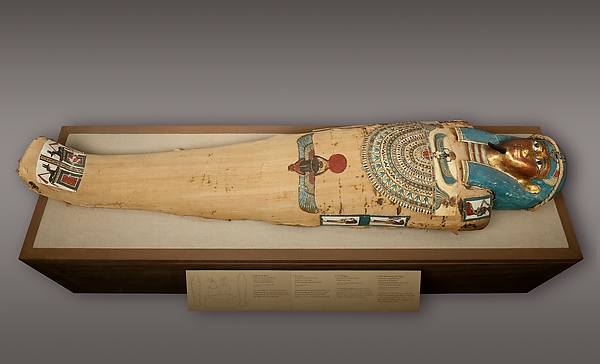
Cartonnages in Ancient Egypt were used over the wrapped mummy mainly for mummy masks and some important parts of the body. The cartonnage of Irtirutja in the Metropolitan Museum of Art of New York dates from the Ptolemaic period. In it one can see how the artist of...