Tacky People in the Art of Amarna?
Ancient Egyptian art followed a strict canon, shaped by ideals of order and self-control. As a result, human figures often appear rigid and limited in movement.
Even when artists depicted dynamic scenes (dancing, fighting, or working), the figures still lack naturalness and grace. The overall style remains constrained and formal.
Movement Reserved for the Antagonist
However, Egyptian artists were capable of representing movement in vivid and expressive ways. This is especially clear in scenes where the pharaoh defeats his enemies, moments that required the idea of chaos to be conveyed.
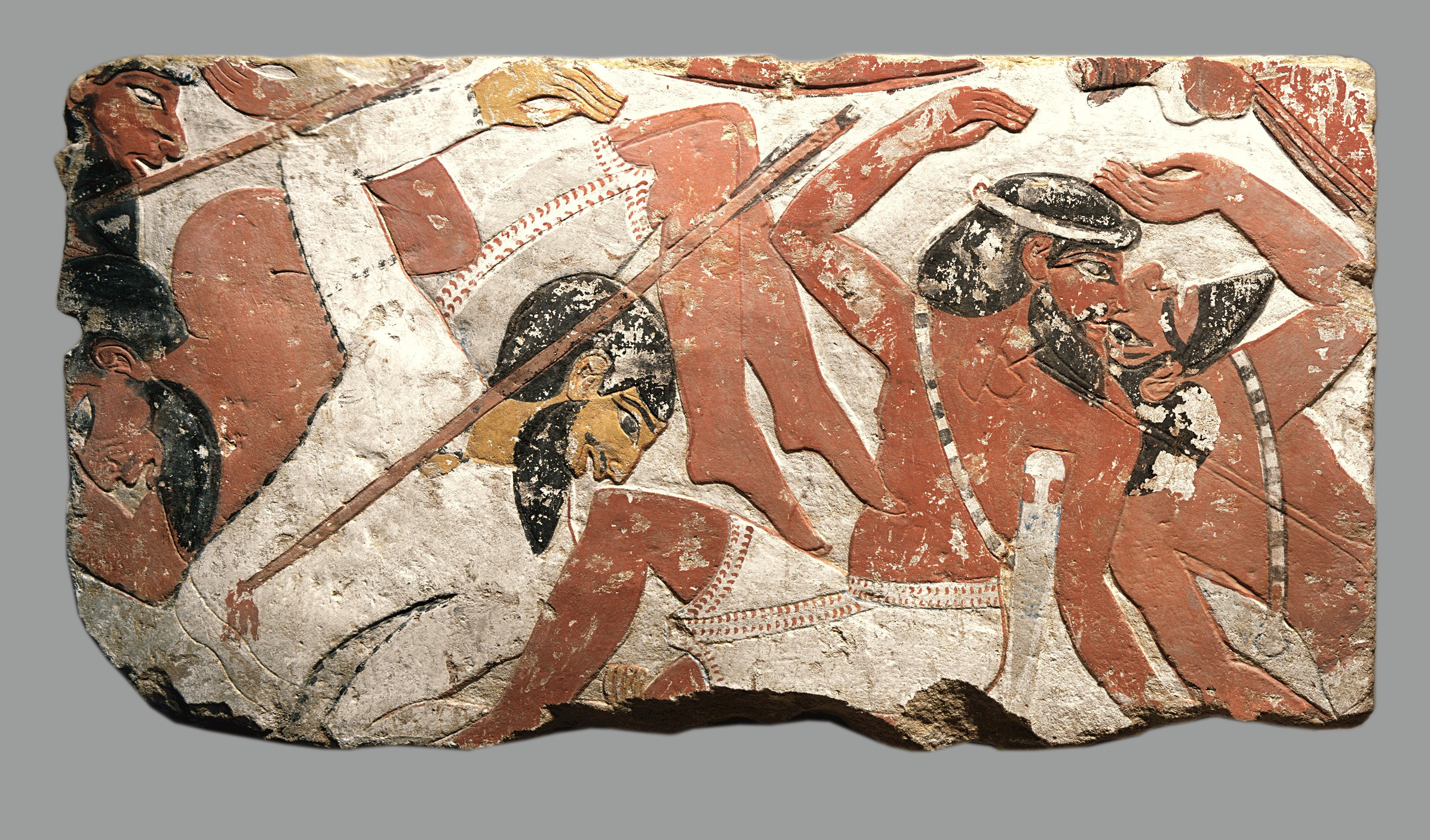
War scene. Relief from Assasif. Probably Syrian war of Amenhotep II. Metmuseum
In these scenes, enemies are shown falling, twisting, bending, or suspended in midair. Their exaggerated movements express the violence and disorder associated with chaos.
In contrast, the pharaoh represents order. He stands calm and composed in his chariot, firmly in control, embodying stability and balance.
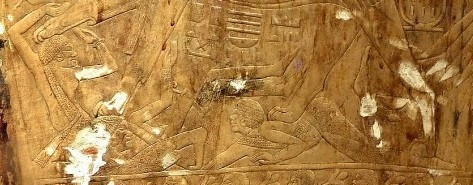
Inner detail from the Chariot of Tutmosis IV. Cairo Museum
Spontaneity under Akhenaten
During the reign of Akhenaten, a new sense of fluidity appeared in artistic representations, even in scenes without conflict or danger.
Amarna art is known for its more natural depictions of the royal family. Akhenaten, Nefertiti, and their daughters are often shown in intimate and affectionate moments. This introduced a new idea into Egyptian court art: spontaneity, closely linked to movement and fluidity.
Movement and Expression in the Tomb of Ay
In the tomb of Ay at Amarna (EA25), there is a small but remarkable scene full of movement and spontaneity. It forms part of a larger composition showing Ay being rewarded by the royal family at the Window of Appearances.
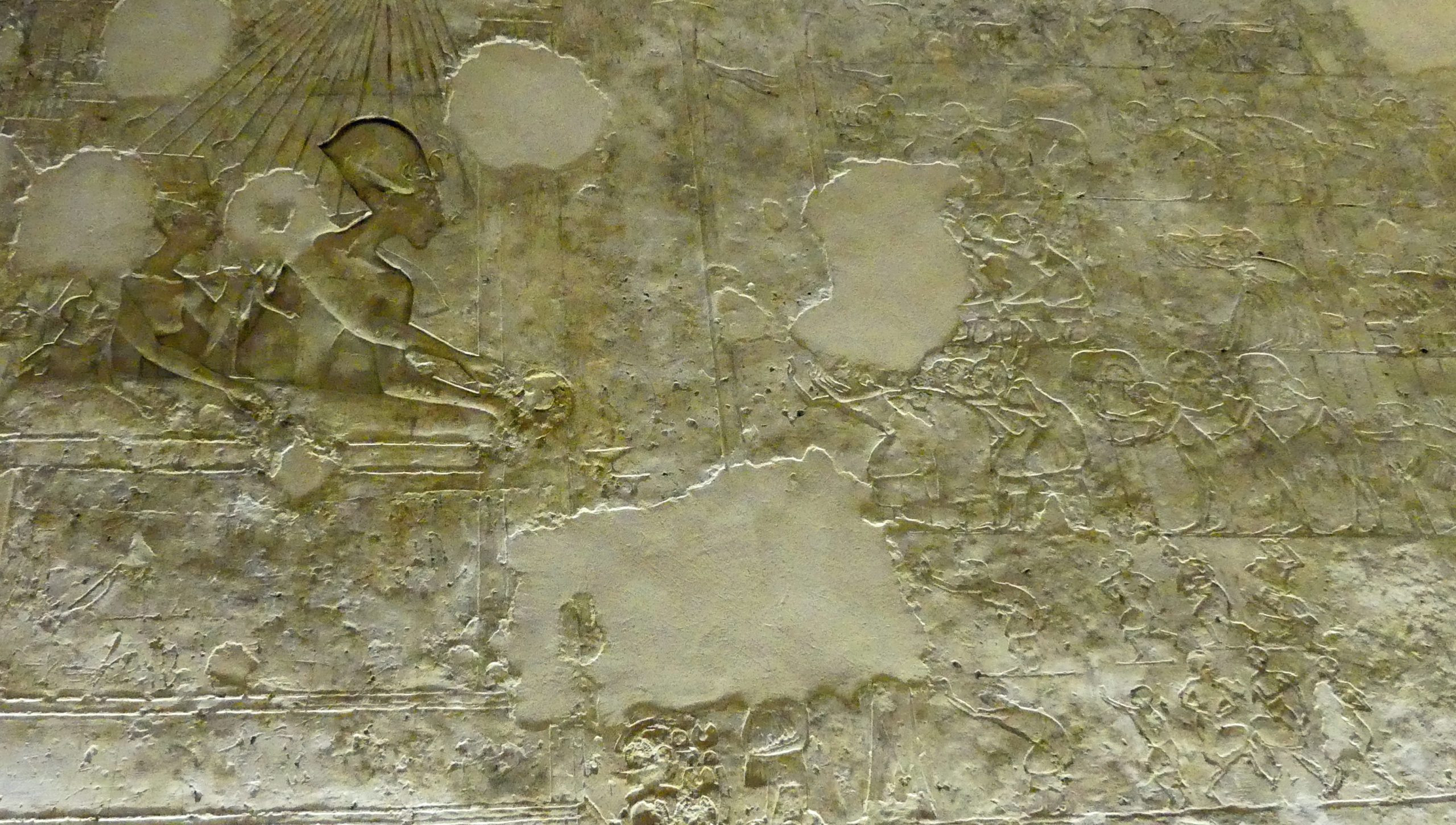
Ay being awarded by the Royal Family. Relief from his tomb in Amarna (EA25). Wikimedia Commons
To the right, a group of officials watches the ceremony. Facing the main figures, they celebrate in a controlled and respectful way—raising their arms in adoration or bowing in reverence. Their behavior is orderly and composed.
But not all of them.
In the lower right corner, a group of seven men stands out. Their movements are unusual: they gesture energetically, sway, dance, jump, and turn. Unlike the others, they appear lively and uncontrolled, sharply contrasting with the calm order of the scene.
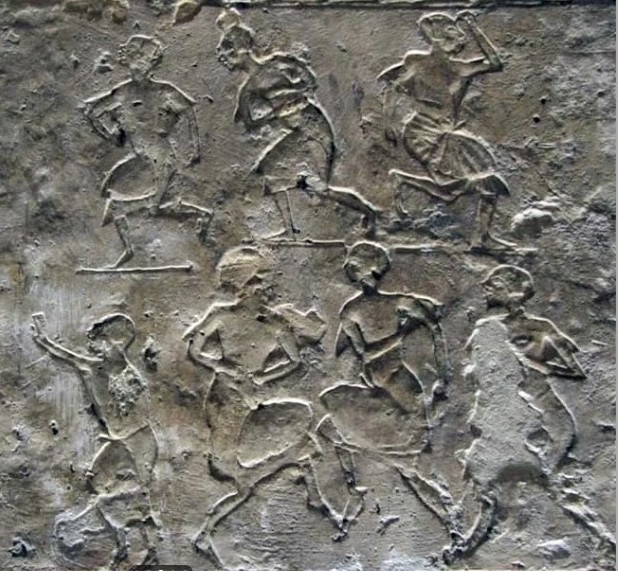
Detail of the seven men celebrating the award ceremony of Ay. Link to the Image
Euphoria and Enthusiasm
The artist used simple but effective techniques to convey this sense of movement:
-
Arms pointing in different directions.
-
Bent knees.
-
Feet lifted off the ground.
-
Twisting torsos.
-
No shared ground line, creating a sense of instability.
These elements create a vivid and expressive scene. The seven men seem full of energy, radiating euphoria and enthusiasm.
Interestingly, the artist used techniques normally reserved for scenes of chaos to express joy. Instead of relying on facial expressions, emotion is conveyed entirely through body movement.
Why?
Why include such a scene in a formal ceremony?
One possibility is that this part was executed quickly. However, the tomb of Ay was never completed, and there was no urgent need to finish its decoration.
Another idea is that a different artisan created it with a unique approach. This is unlikely, since relief carving typically required approval from a master artist before execution.
A more convincing explanation is that these figures represent common people. Unlike the controlled behavior of the elite, these seven men display a more spontaneous and perhaps more vulgar side.
Their position at the edge of the composition supports this idea. In real ceremonies, commoners would have been kept at a distance from the royal family.
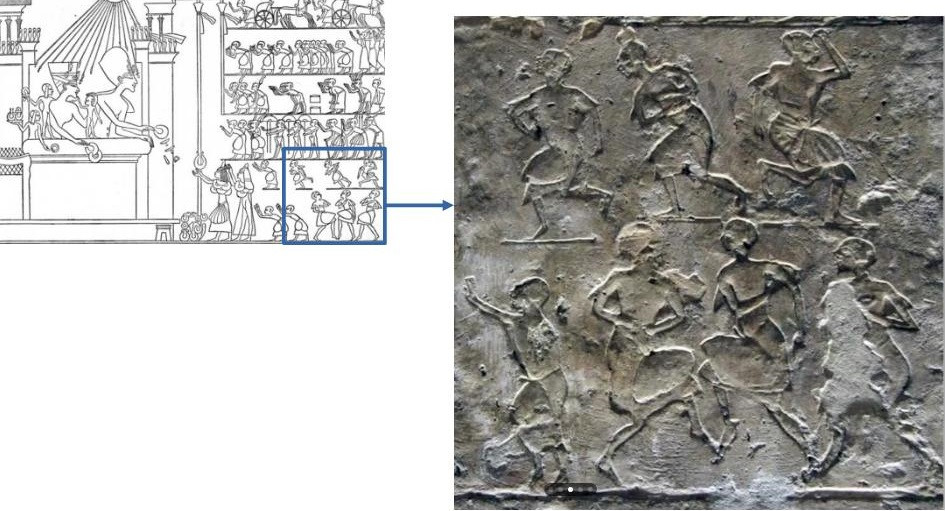
Position of the seven euphoric men in the composition.
Moreover, the use of “chaotic” artistic techniques may reflect how the masses were perceived: emotional, uncontrolled, and closer to disorder.
In this sense, these “tacky” figures could represent the closest thing to chaos within the otherwise ordered world of Amarna.
Of course, this remains only a hypothesis.