The Royal Prince Tutankhuaton. An Innovation in the Art of Amarna
A block from Ashmunein showing Tutankhuaton as royal prince, an innovation in the art of Amarna.
In the last post it was considered the role of Nephthys in the religion of Ancient Egypt. It is a fact that Nephtys was a very important goddess in the ancient Egyptian pantheon. Isis needed her help for granting the resurrection of Osiris; they both Isis and...
There is a scene of the Book of the Dead from the tomb of Ay, in which are depicted on the solar boat the gods of the Heliopolitan cosmogony and the Myth of Osiris (apart from Seth): Re-Horakhty, Atoum, Shu, Tefnut, Geb, Nut, Osiris, Isis, Horus...and out of the...
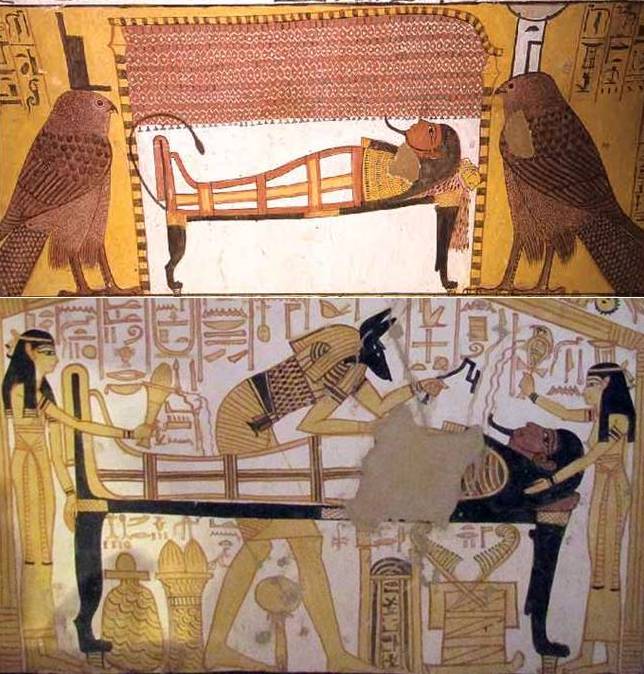
Among the Ancient Egypt gods, Isis and Nephtys occupied a very important role. It is an ancient Egypt fact, that the two professional mourners in the role of Isis and Nephtys did a mourning rite during the funeral for granting the dead’s resurrection. All along our...
In ancient Egypt the dead needed many faculties for restarting his new life in the Hereafter: breathing, seeing, walking...and virility. Sex was an essential aspect for the resurrection in Ancient Egypt and in the funerary rites some ritual practices were full of...
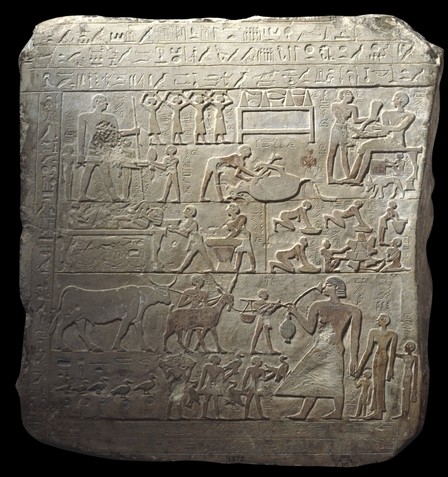
Egyptian art can hide very important information in small pieces. That is the case of the stele of Sebekaa in British Museum. This piece of ancient Egyptian art dates from XI Dynasty and it was found in Thebes. In just a space of 70 cm x 60 cm (aprox.) the Egyptian...
We have been writing about the ancient Egyptian expression “The Hand in the Mouth” (Djat Ra) as a way in Egyptian language of referring to the gesture made by the mother breastfeeding her baby. In the funerary sphere of Ancient Egypt that expression seems to be...
The assiduousness of the icon in the icnongraphy of Ancient Eypt of the mother bringing closer her breast with the aid of her hand to her baby’s mouth seems to be plenty of sense in the ancient Egyptian belief related to the new life. For that reason it does not...
Let's make a reflection about the expression "Djat Ra" belonging to the Opening of the Mouth ceremony of Ancient Egypt and that we saw in a previous post. It appears in a resurrection scene in the tomb of Qar; according to the inscription the mourner and the...
Perspective in Egyptian art was special. For us, perspective is the representation on a flat surface of reality how it is seen by human eye. That means that observer is an important element when the artists paints or draw something. In Egyptian art the artists had...
Mourning is a extended practice in funerals of many cultures all over the world. Not just in Ancient Egypt, but also in some other African cultures, in the ancient Assyria or in Archaic Greece. I recently wrote a short text about mourning in Ancient Egypt for...
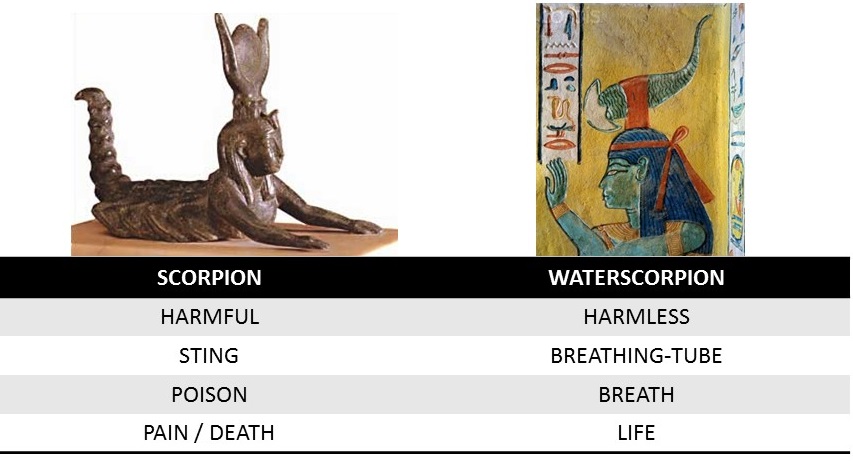
The goddess Serket was associated in Ancient Egypt to the scorpion and to the waterscorpion. Scholars have usually cosidered the ancient Egyptian goddess Serket as a goddess scorpion, whose harmful bite made her an effective protection against poisonous stings. Not...
We know why the ancient Egyptian goddess Neith was part of that team of four goddesses-mourners (Isis, Nephtys, Neith and Serket) protecting the dead. Serket was also a very important divinity in the Egyptian pantheon. She had a great healing power and for that...