The Royal Prince Tutankhuaton. An Innovation in the Art of Amarna
A block from Ashmunein showing Tutankhuaton as royal prince, an innovation in the art of Amarna.
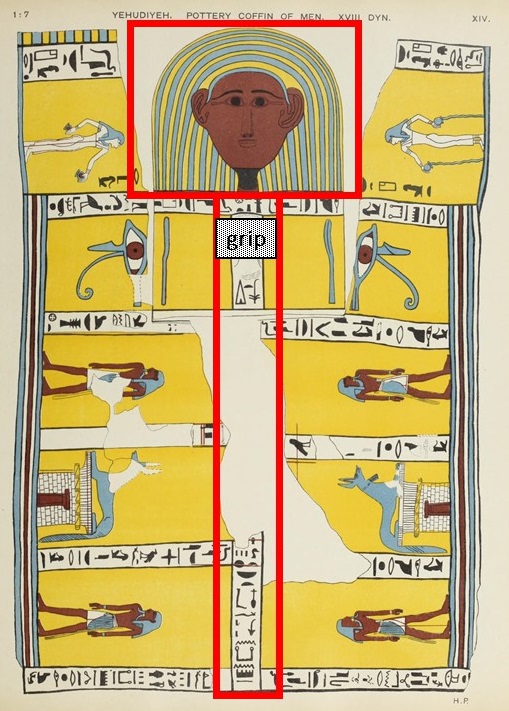
In Ancient Egypt Isis, Nephtys, Neith and Serket formed a team of four goddesses, who protected the caponic jars containing the organs of the dead. For that reason Egyptians depicted these four goddesses in the canopic chests and sometimes also in sarcophagi. We...
Hair has been from ancient times an important element for preserving a good- looking. Recently in the blog Studia Humanitatis it was published a very interesting post about how the concept of a woman's beauty is closely related to hair. He mentioned a passage of...
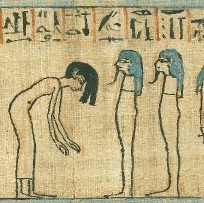
Egyptian artisans of the New Kingdom used hair in their drawings for expressing body movements (dance, body bow...). This technique, adopted from the way of drawing the professional mourners, was applied to the masculine figures in a respectful attitude. The front...
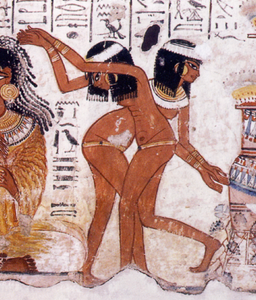
Hair became in Ancient Egypt a resource for expressing things. The bending hair was used in Ancient Egypt art for drawing body movements. As some movements were related in Ancient Egyptian belief to some attitudes, hair was also used for expressing those attitudes....
Due to the estrict rules of the Egyptian art, artists in Ancient Egypt needed to find unnatural ways of expressing some movements, especially during the Old and Middle Kingdom. Distorsion and sprain characterises dynamic scenes (dancing, acrobaces, games…) in those...
The blog "Hair and Death in Ancient Egypt" started in May 2013 as a way of transmiting the results of my research about the mourning rite in the funerary ceremony of Ancient Egypt. Especially base on Egyptian art and religious texts. At the beginning the posts were...